



AI agent governance controls what AI agents are allowed to do in production, who can change their behavior, and how those changes are reviewed and recorded. This means access control, approval workflows, policy enforcement at runtime, and an audit trail.
AI agent governance platform
Control your AI agent behavior (and prove it).
Enforce policy at runtime, keep a record of changes to agent behavior, and set access controls.

AI governance
AI governance tends to stop short of production.
You can document, review, and sign a policy, but that doesn’t stop your agent from doing something you never expected.
- 01Agents can act autonomously.
Model or prompt changes (not new code) can shift behavior without anyone approving it.
- 02Policy docs aren’t enough.
Governance in a policy doc doesn’t stop harmful changes from reaching your users.
- 03Issues can spiral out of control.
When something goes wrong, stopping it means shipping a quick fix, but the damage may be already done.
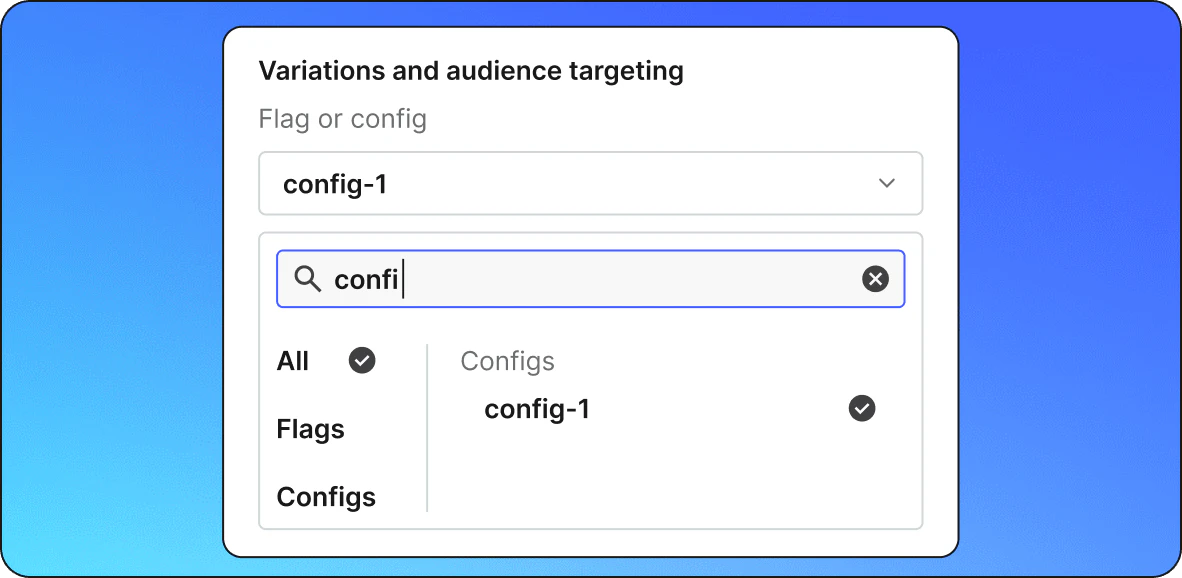
Targeted configurations

Serve different agent behavior by geography, user tier, or regulations.
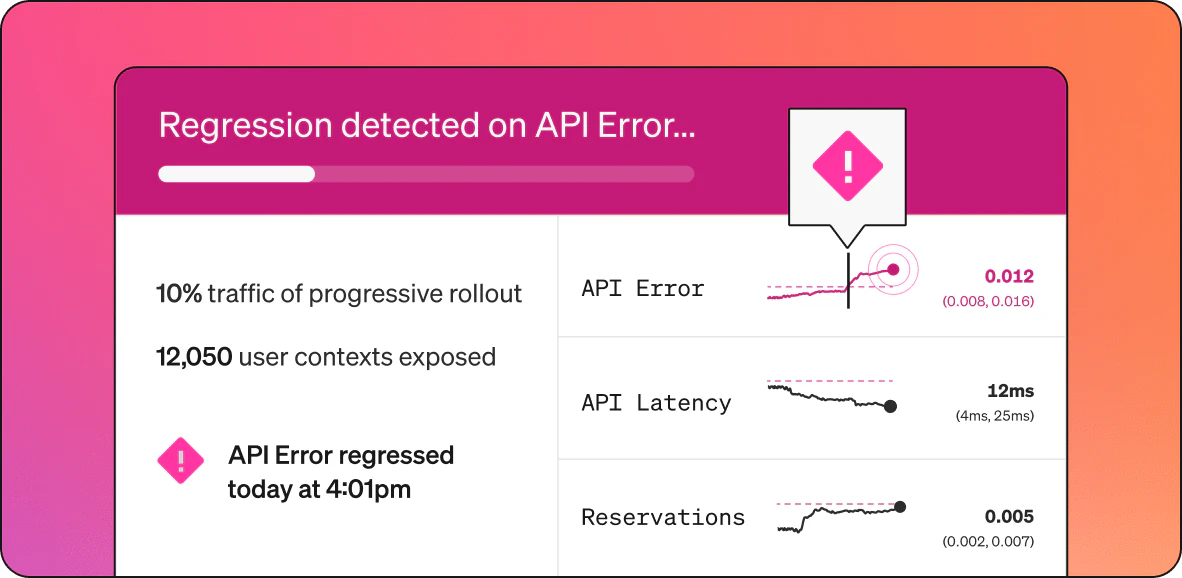
Runtime guardrails
Adaptive triggers switch to fallback behavior when a quality metric breaches its threshold, without shipping code.
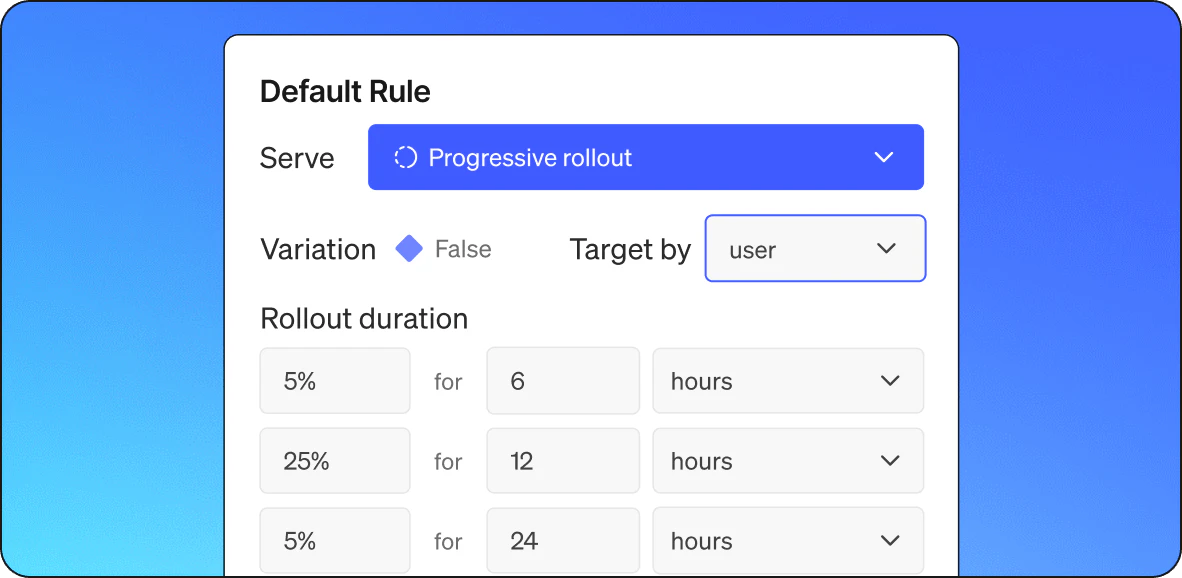
Progressive rollout
Observe new agent behavior with a small audience first before expanding.

Enforcement
Enforce policy at runtime.
Targeting rules decide agent behavior for specific audiences. Guardrails and fallbacks handle edge cases where something goes wrong.

Control
Control who changes agent behavior.
Agent behavior lives in AgentControl. Access controls decide who can touch which prompts, models, and parameters.
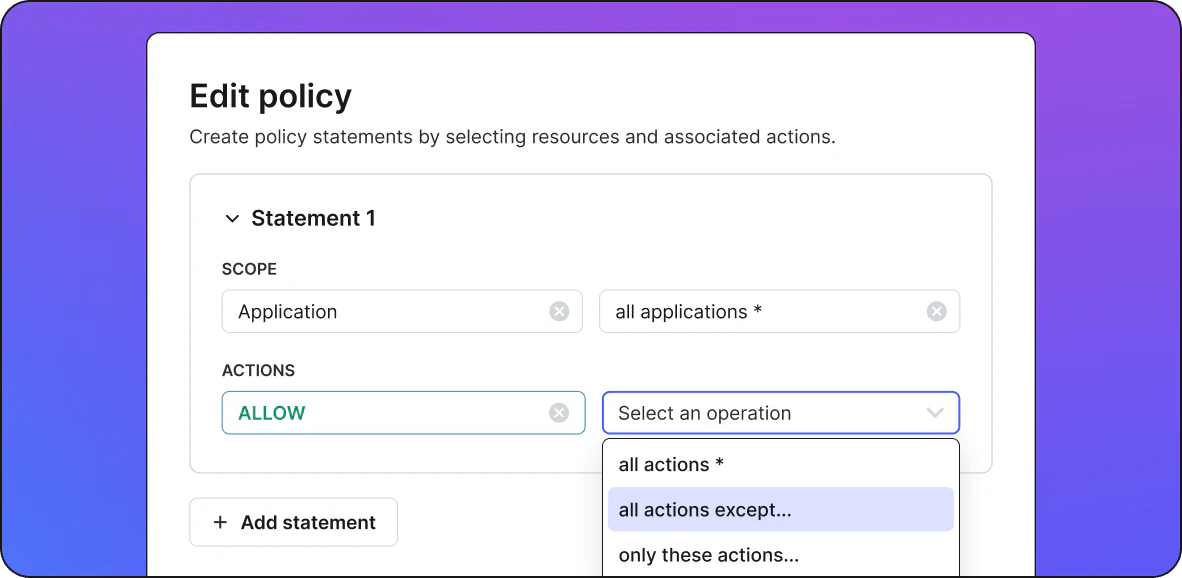
Role-based access
Scope permissions by project, environment, and resource.
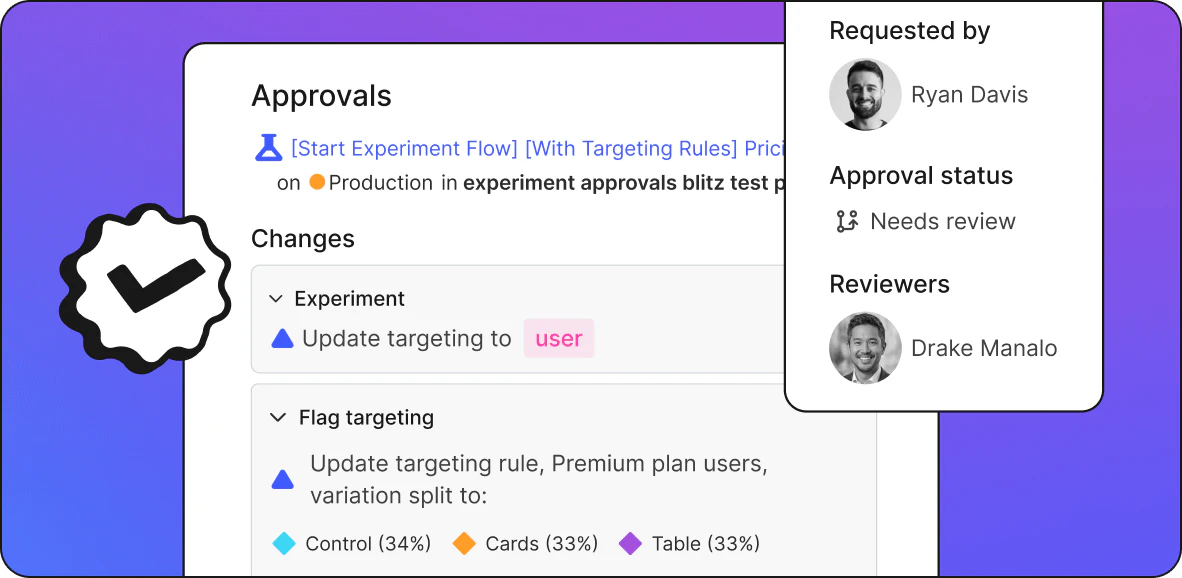
Approval workflows
Require sign-off before changes to agent behavior reach production.
Separation of duties
Let product and engineering teams iterate without giving everyone full access.
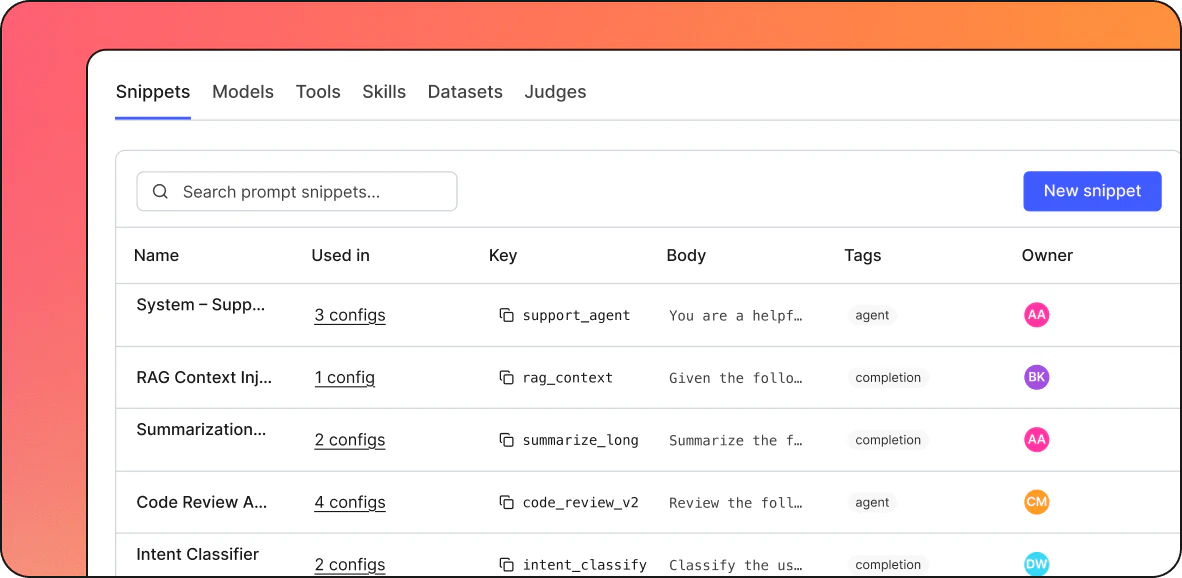
Full audit log
A record of changes to configs, prompts, models, and targeting rules.
Version history
Compare any two versions of your agents and review the differences.
Instant rollback
Revert to a known-good version without a redeploy.

Record
Changes to your agents, on the record.
Governance includes answering what changed, who changed it, when it happened, and what it replaced. Version and log edits to agent behavior.

Visibility
Governance without visibility isn’t governance.
You can't enforce rules on unknown behaviors. Observability ties agent performance and output to the configs and versions that produced it.

Behavior monitoring
Track latency, token usage, error rates, and output quality across versions.
Traceable decisions
Connect traces and tool calls to the specific config active at the time.
Automatic response
Set thresholds on metrics and roll back automatically when they're crossed.
Stay on top of agent governance with LaunchDarkly.

Prove your promises.
Every change to agent behavior is versioned, attributed, and logged.

Mitigate risks.
Teams iterate on agents inside guardrails instead of engineering ticket queues.

Regulation-ready governance.
Access, approvals, and audit trails that support HIPAA, SOC 2, and internal compliance requirements.
AI agent accountability starts here.
Autonomy and oversight without compromise. LaunchDarkly gives you both for one agent or a hundred.
- 01Real-time enforcement
Turn rules into controls that monitor and act on AI behavior.
- 02Approvals without bottlenecks
Require review on production changes without slowing iteration.
- 03Audit-ready
Record changes as they happen rather than rewriting history later.
Get started todayYour agents stay autonomous.