[Virtual event] Automate Your Software Factory - Nov 5 — Save my seat

Skip to:

AI evaluation platform

AI evaluation for agents and models in production.

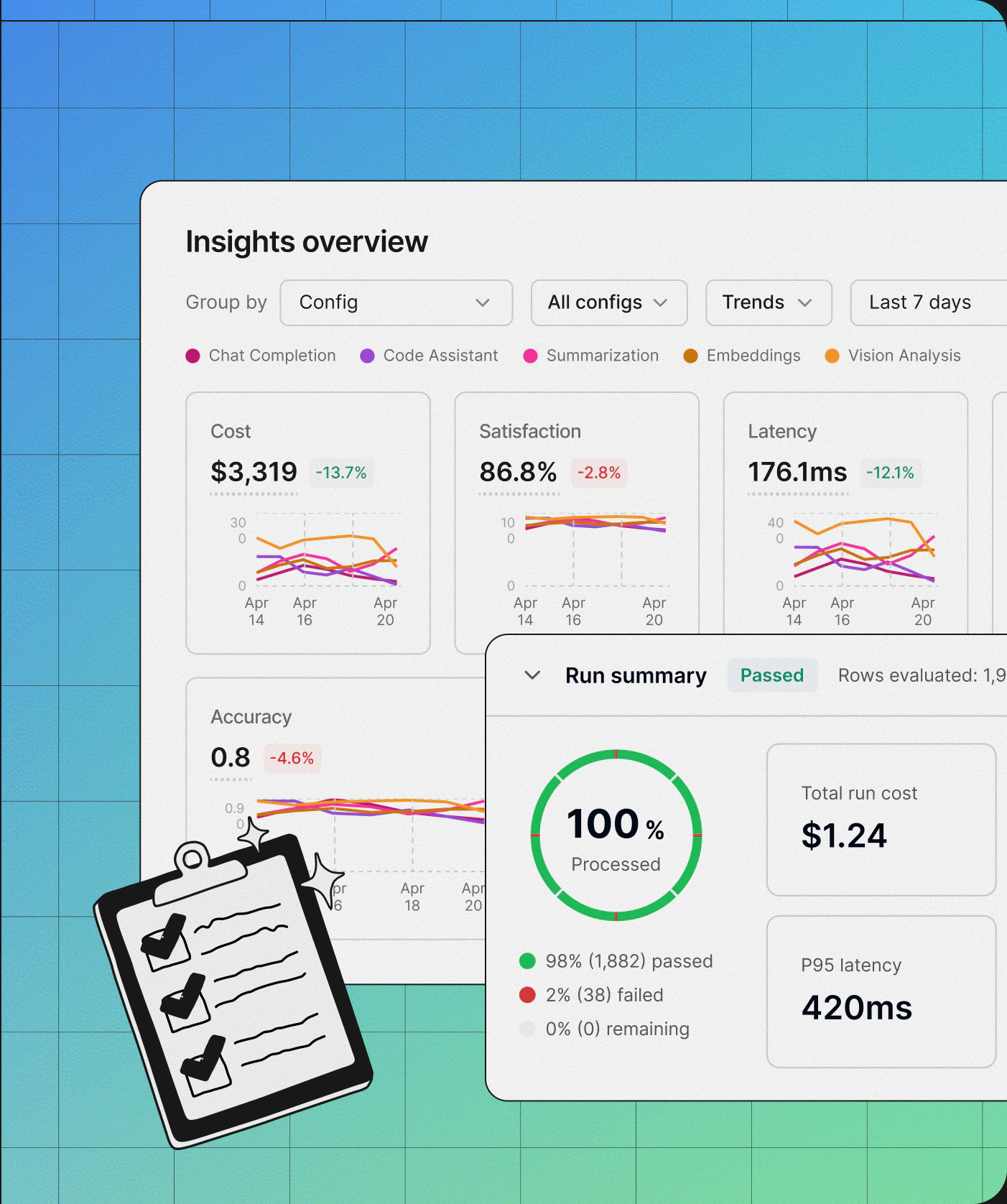
Evaluate AI agents and models against your own criteria offline, then score live production responses (and act on the results without a redeploy).

Production doesn't care about your benchmarks.

A good test set is full of real edge cases, but it's still just a snapshot. Models change, user expectations rise, and a prelaunch configuration that passed can slowly stop being good enough.

Without Runtime Control
  • Evaluation can stop at release, leaving post-launch quality to surface through support tickets.
  • Bad configurations reach everyone at once, because release and exposure are the same event.
  • The fix is often a pull request, build, and release. Recovery is only as fast as your deploy pipeline.
With Runtime Control
  • A threshold breach automatically changes an agent to a last known-good configuration before a user sees it.
  • Responses carry configuration identity, so regression is just one lookup away.
  • Traffic returns to the last known good configuration in under 200ms with no redeploy.

Reusable datasets.

Accordion Item Arrow

Build test sets once and apply the same standards across repeated evaluation runs.

Side-by-side comparison.

Accordion Item Arrow

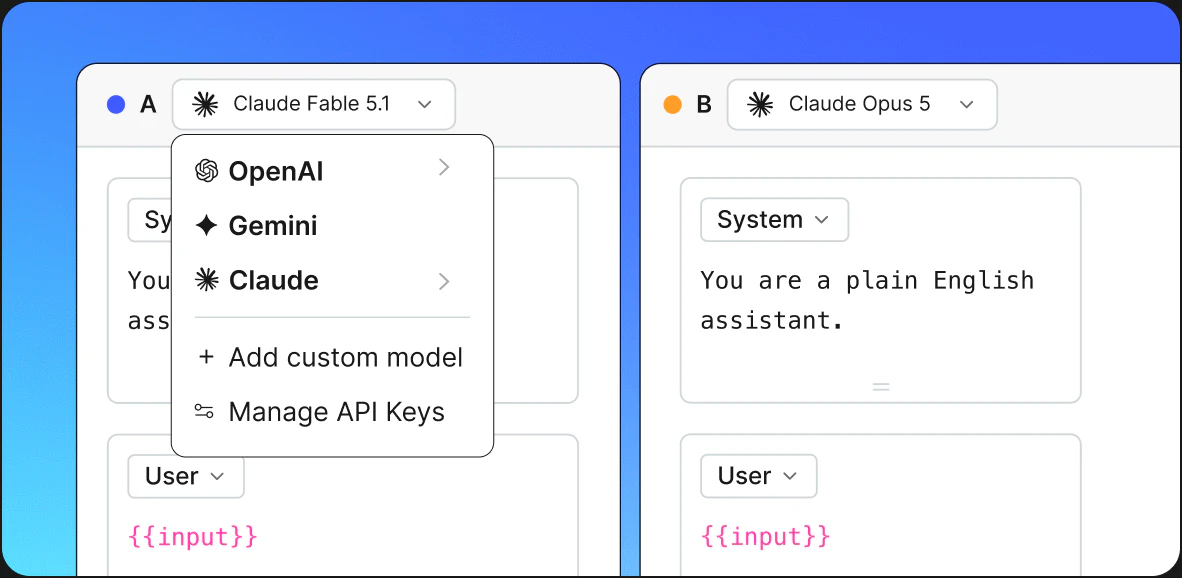
Score multiple models, prompts, and parameter sets against the same inputs.

Custom criteria.

Accordion Item Arrow

Define what good means for your use case instead of using standard benchmarks.

Configurations

The best config you haven't tried yet.

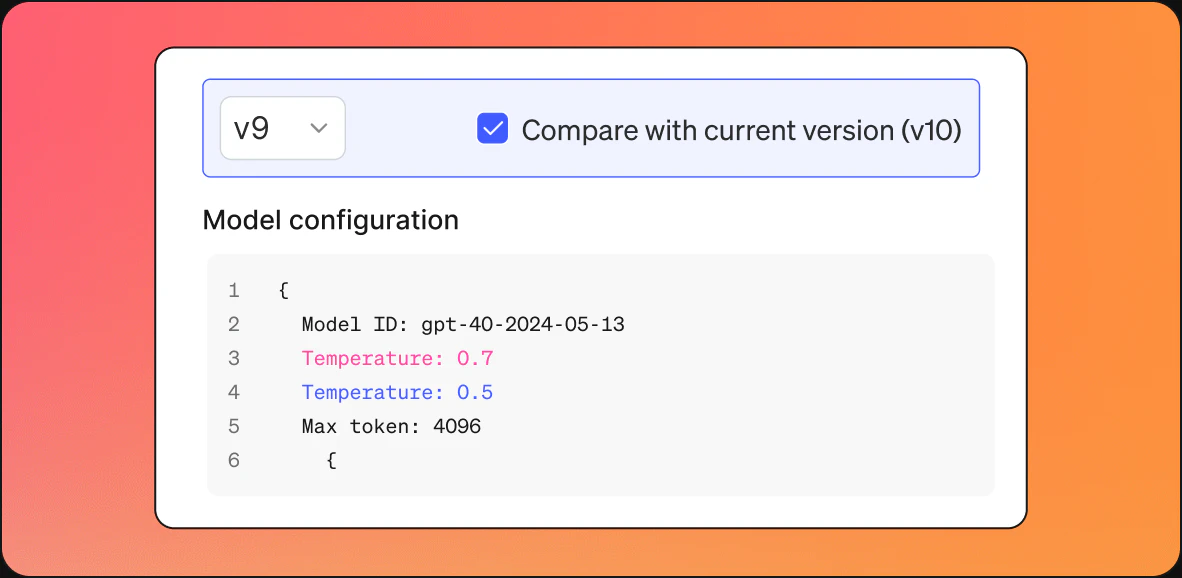
Run a reusable dataset through combinations of models, instructions, and parameters in offline evaluations. Attach judges to score the outputs and see which variation should ship.

Evaluation

Evaluate the model where it runs.

Models don't run in isolation. Agents run with your tools, instructions, and multi-step workflow. Swap a model into an agent config and evaluate it in that context.

Judges on agent configs.

Accordion Item Arrow

Score agent-mode variations the same way you score single-response completions.

Trace-level visibility.

Accordion Item Arrow

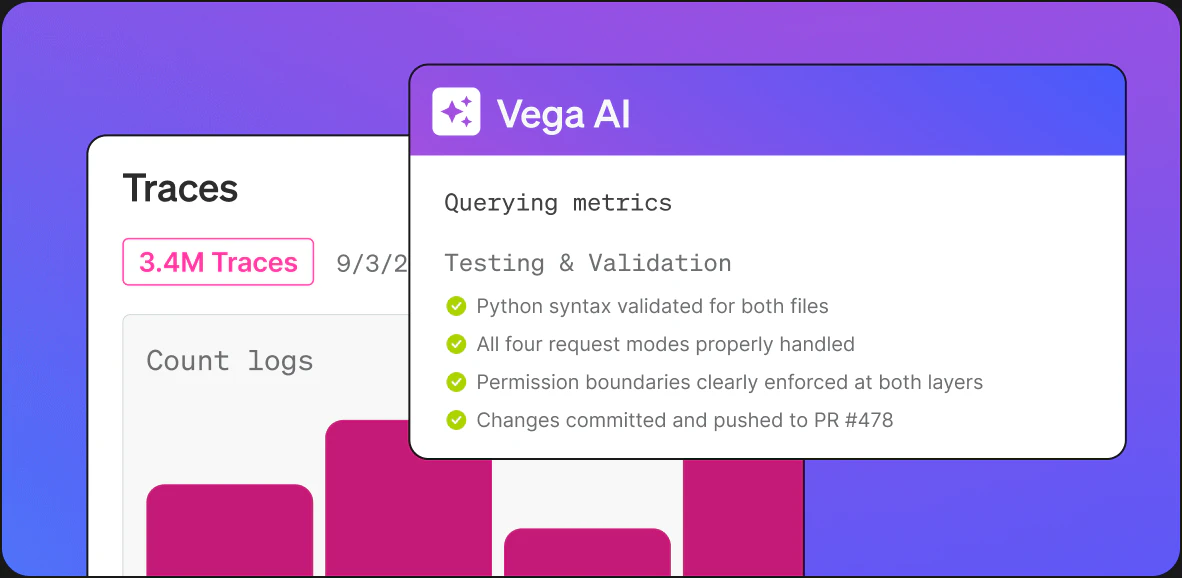
Instrument LLM spans to see the decision path beyond the final output.

Multi-agent workflows.

Accordion Item Arrow

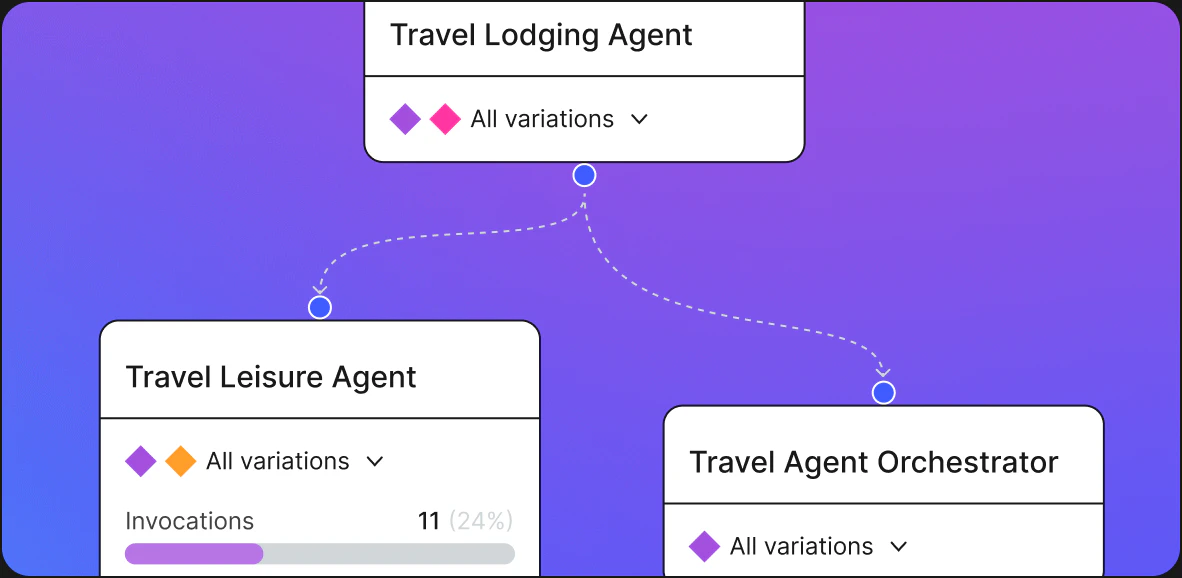
Group metrics by agent graph to find which agent in the chain caused the regression.

Continuous scoring.

Accordion Item Arrow

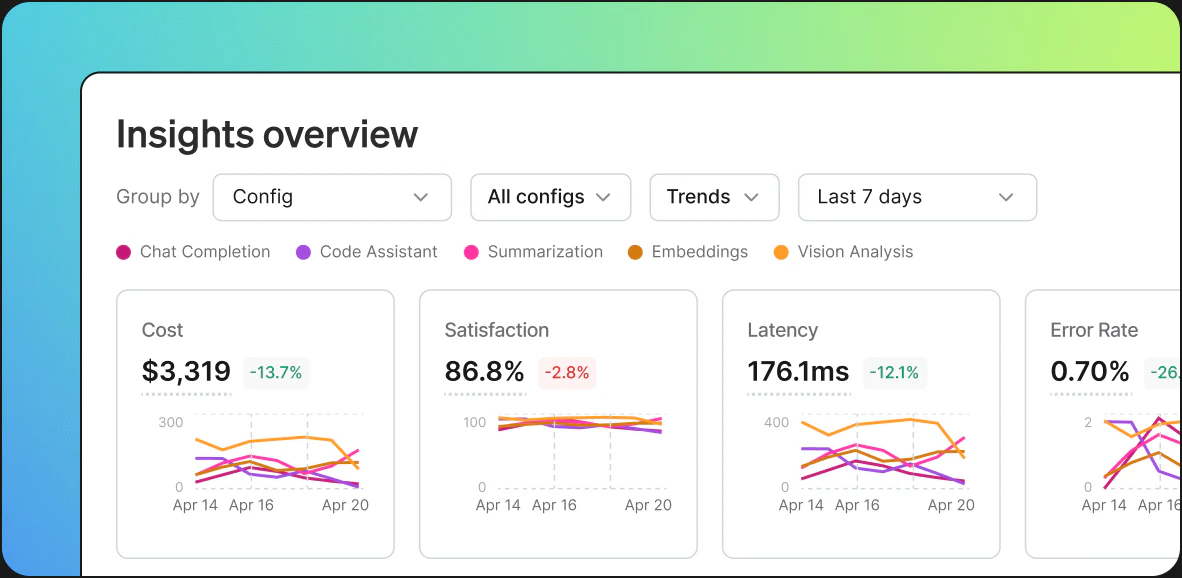
Catch quality drift on the long tail of real user phrasing.

Per-variation attribution.

Accordion Item Arrow

Narrow a regression to the variation that produced it.

Adjustable sampling.

Accordion Item Arrow

Balance evaluation coverage against cost and latency.

Judges

Grade live traffic and trace each score.

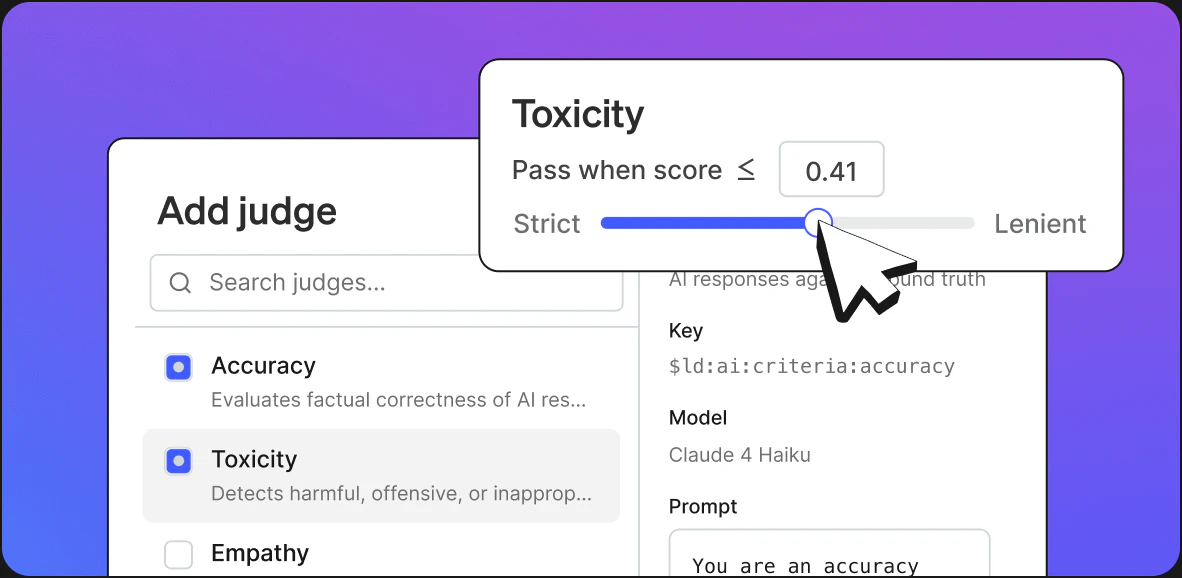
Attach judges to config variations to score live responses. Built-in judges cover accuracy, relevance, and toxicity, while custom judges cover your domain. Scores tie back to the responsible variation.

Observability

Observability opens the loop. Runtime control closes it.

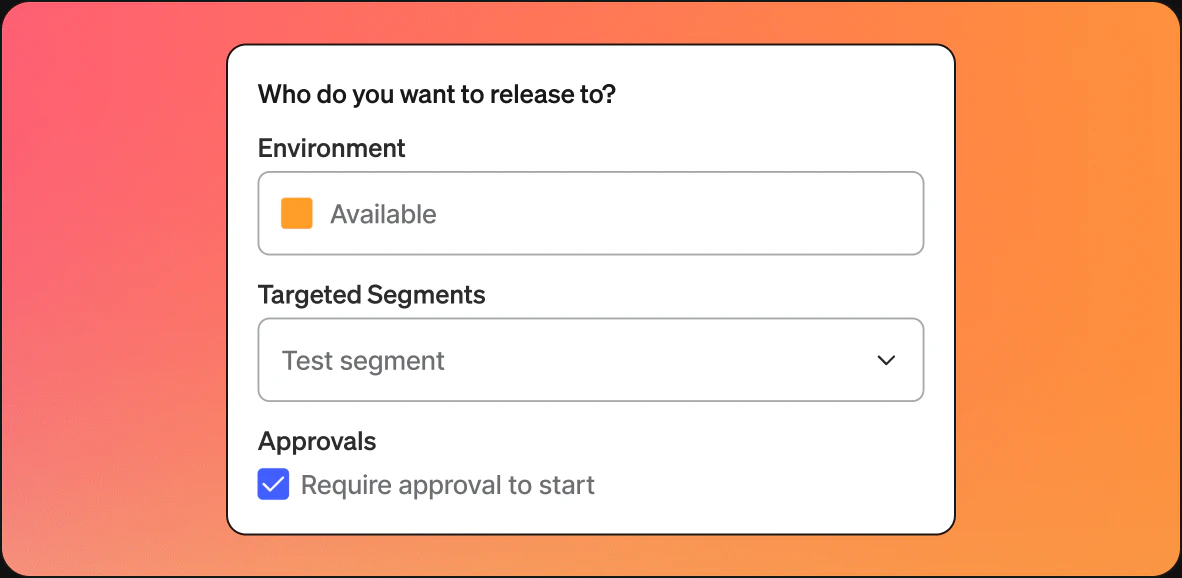
Evaluations only matter if you can do something about it. Because your prompts, models, and parameters are configuration rather than code, a score can pause a rollout or roll back a variation in production without a deploy.

Guarded Releases.

Accordion Item Arrow

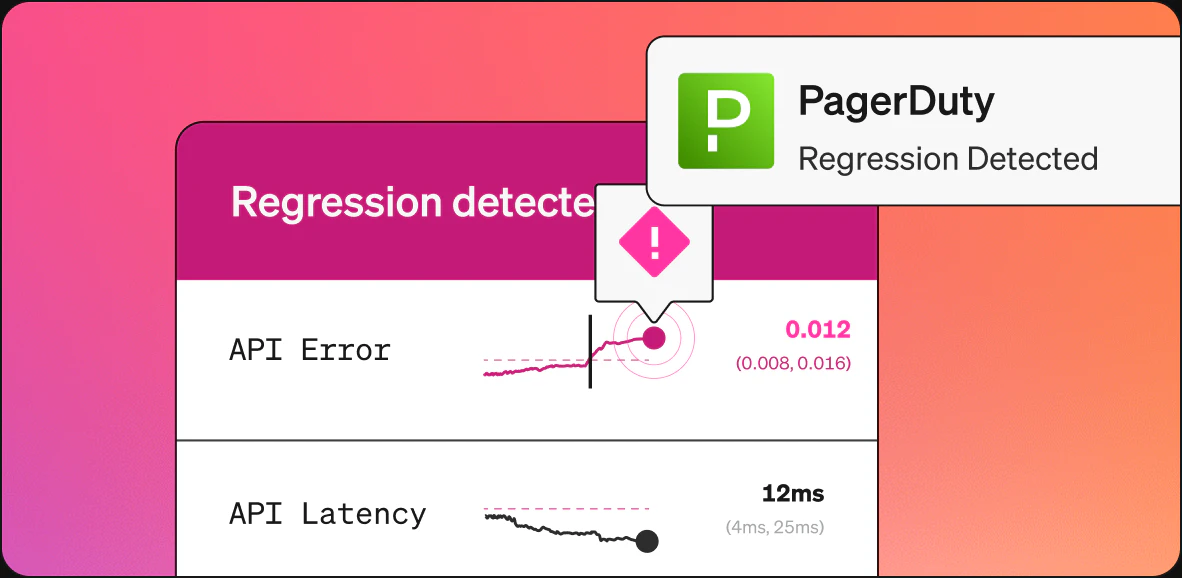
Detect regressions as exposure ramps, then pause or revert automatically.

Variation switching.

Accordion Item Arrow

Change configs to the last known-good configuration in under 200ms.

Targeting rules.

Accordion Item Arrow

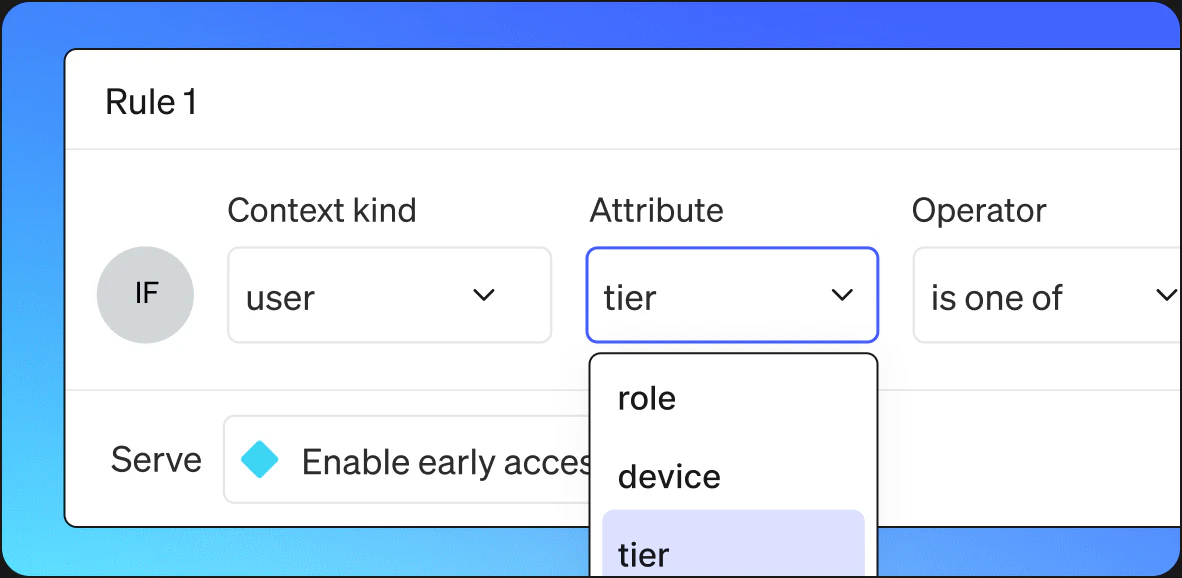
Decide the who, what, when, where, and how behind every variation.

AI evaluation that reaches production.


30% higher satisfaction, 20% more conversions


Gamma's model test lifted satisfaction on complex prompts, alongside a rise in free-to-paid conversions.

The real ‘a-ha’ moment was when we realized we could test models against each other and measure the real user impact. Users are generating better stuff even with the same instructions. As a business, better output directly translates to higher conversion rates, higher retention, and happier customers.


Jon NoronhaCo-founder and Chief Product Officer, Gamma

AI evaluation that reaches production.

The real ‘a-ha’ moment was when we realized we could test models against each other and measure the real user impact. Users are generating better stuff even with the same instructions. As a business, better output directly translates to higher conversion rates, higher retention, and happier customers.


Jon NoronhaCo-founder and Chief Product Officer, Gamma

Gamma's model test lifted satisfaction on complex prompts, alongside a rise in free-to-paid conversions.30% higher satisfaction, 20% more conversions
Get started today

Make your agents, models, and evaluations run nonstop.

FAQs

  • AI evaluations score how well an AI model or system performs against defined criteria. Offline evaluation scores a candidate prerelease against a fixed dataset. Online evaluation scores live production responses continuously on traffic the test set didn’t contain. Both matter, but they measure different things.