For the last year, most conversations about AI have focused on what agents can do. Can they write code? Automate workflows? Resolve customer issues? Accelerate development?
Those are important questions. But they're no longer the hardest ones. The harder question is how to operate agents at scale in production.
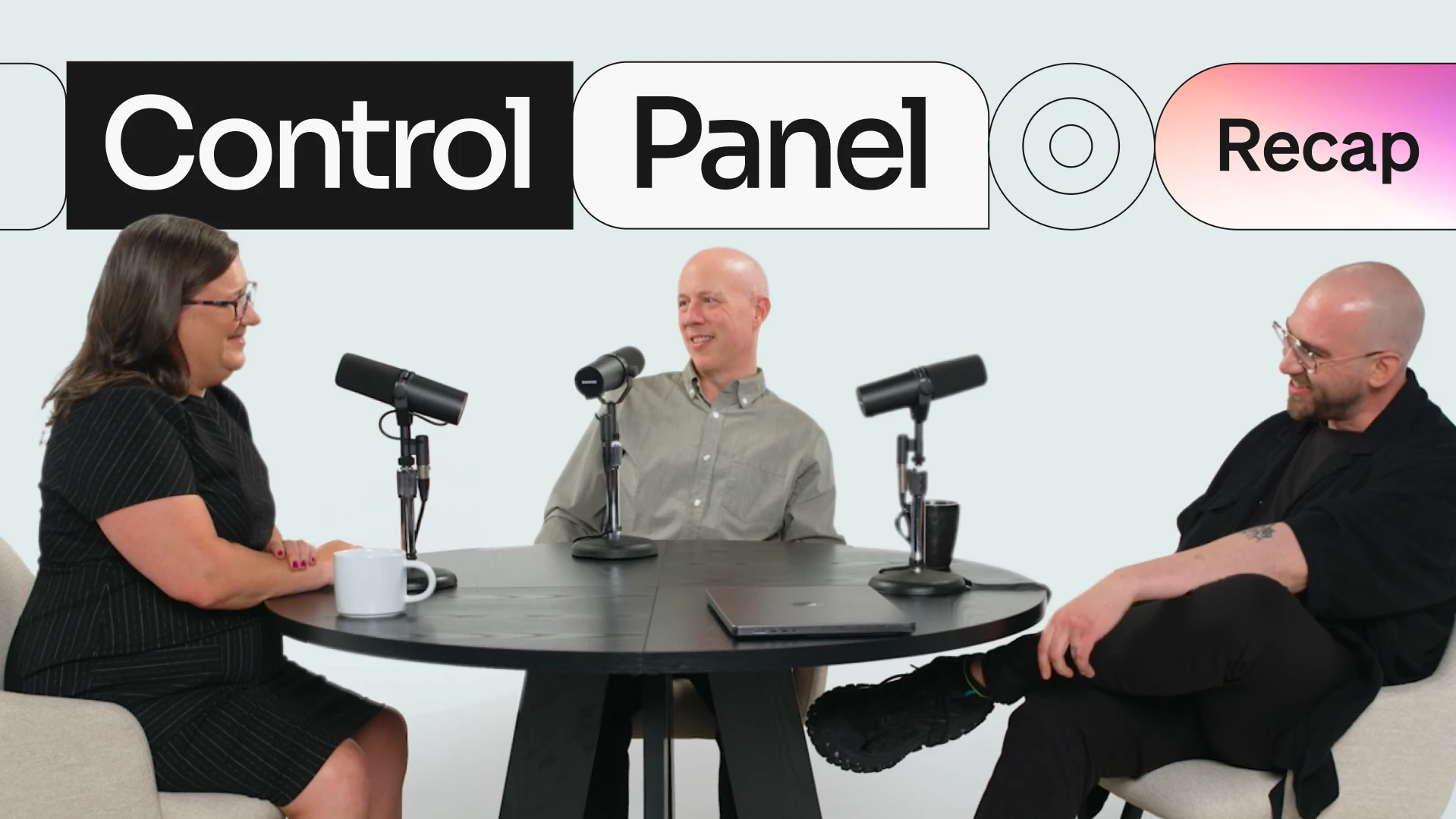
That was the focus of a recent conversation with LaunchDarkly CEO and Co-founder Edith Harbaugh, CTO Cameron Etezadi, and Head of AI Marek Poliks. They discussed the challenges that engineering teams increasingly face: maintaining control of AI-built code and agents in production.
The bottleneck moved, and so did the risk
The cost of producing software is falling fast. Ideas that previously took weeks to prototype can now become working applications in hours.
As AI accelerates software creation, the constraint is no longer writing code. It's everything that happens after: reviewing it, releasing it, and controlling what it does after it's live. Agents make this shift impossible to ignore.
Traditional software followed a familiar pattern: Build, test, deploy, monitor, fix. The assumption underneath that model was simple—software changed when developers changed it. Agents don't work that way.
An agent's behavior can shift without a single line of code changing. Models get updated. An environment shifts. An input you never tested for shows up. Customers often experience the impact before engineering teams know anything has happened.
The old build-test-deploy-monitor-fix loop assumed that change only happened when you made it. That assumption is gone. As Edith put it, "Agents are like code—but times 100, on Red Bull. With code, there's a limit to how much a human can produce. An agent can produce infinite code, and that code can keep changing."
The takeaway for engineering leaders: Pre-production testing and deployment controls still matter, but they’re no longer sufficient on their own. Control has to live where change actually happens now: at runtime.
Agents are like code—but times 100, on Red Bull. With code, there's a limit to how much a human can produce. An agent can produce infinite code, and that code can keep changing.
AgentControl moves beyond observing problems to automatically fixing them in production
Most teams operating agents in production already have observability tools. They know when latency spikes, costs increase, or outputs degrade. The problem isn't visibility. The problem is action.
An alert can tell you that an agent produced a bad response. But it can't fix it. By the time a dashboard shows something is wrong, a customer has often already experienced the failure. That's the gap AgentControl was built to close.
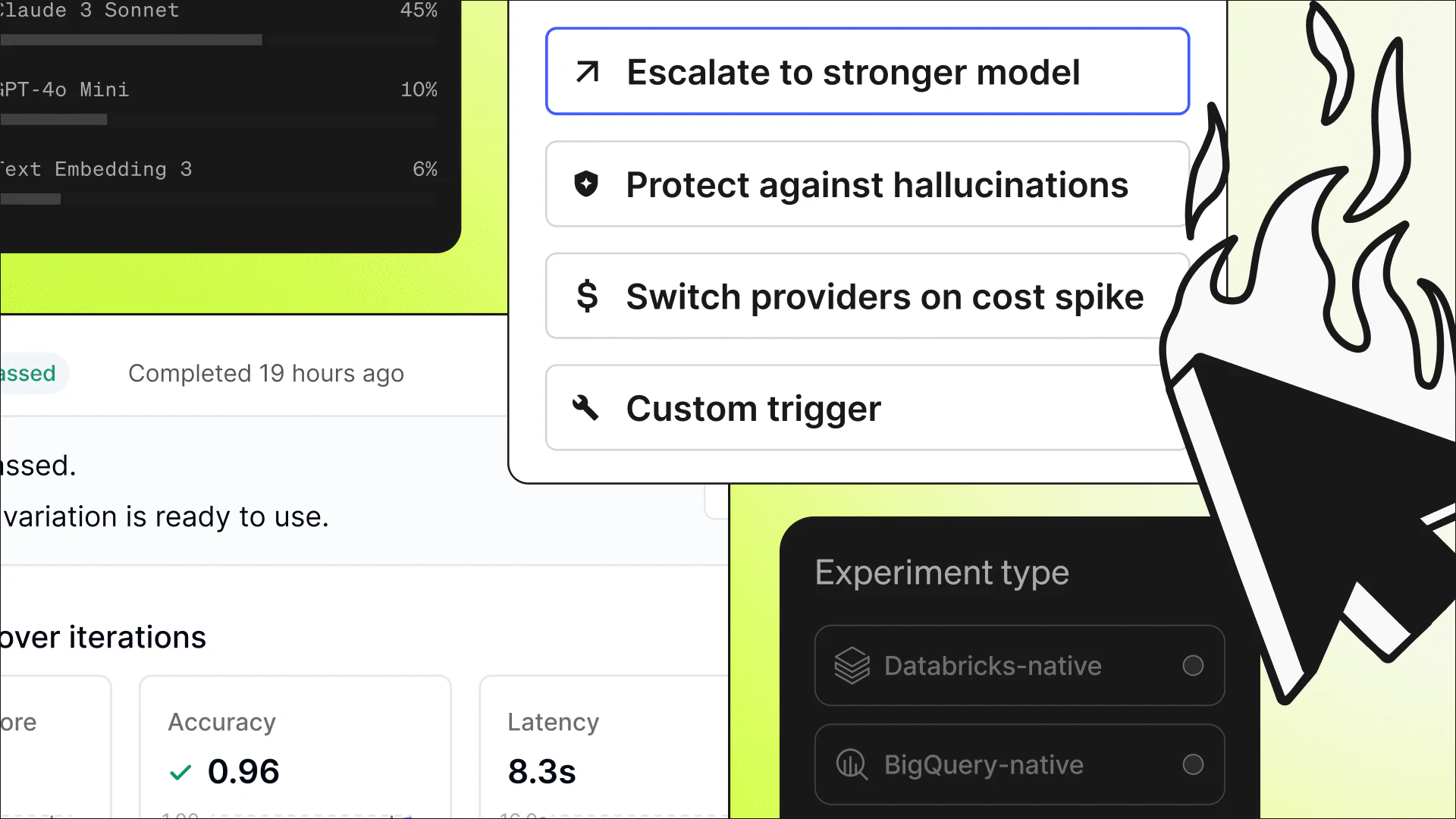
AgentControl gives teams the ability to configure, release, observe, and automatically correct agent behavior in production—without redeploying.
During the conversation, Marek demonstrated a banking support agent that was intentionally configured with a lower-cost model. When a user asked an off-limits coding question ("Help me reverse a linked list in Python"), the system caught and corrected the behavior in production in milliseconds, with no redeploy and without the customer ever seeing the bad answer.
That demo highlighted what runtime control enables:
- Changing prompts, models, tools, and policies without redeploying.
- Safely rolling out model and prompt updates using progressive delivery.
- Automatically detecting and remediating degraded behavior.
- Optimizing agent performance across cost, latency, and accuracy goals.
- Protecting customer experiences even when agents encounter unexpected situations.
Marek summarized the whole idea in one line, “We can remediate an agent that's misbehaving in production—live, in just milliseconds—without a customer ever knowing the problem even occurred."
We can remediate an agent that's misbehaving in production—live, in just milliseconds—without a customer ever knowing the problem even occurred.
Control is what makes speed safe—and we ran it on ourselves first
AI is often framed as a trade-off between velocity and safety. Move faster, accept more risk; move slower, stay in control. In practice, the opposite may be true.
When models, prompts, and agent behavior can change continuously, slowing down releases doesn't eliminate risk. It simply means you're spending more time validating a system that will continue evolving after deployment.
The thing that makes speed safe isn't slowing down. It's control. We saw this firsthand inside LaunchDarkly.
Project Fairytale is the name of a project we’ve started to build a software factory to update some of the oldest parts of our codebase, automating as much of the process as possible with agents. The main lesson was that the more structure, checkpoints, and human-defined guardrails the team gave agents, the better and faster the agents performed.
As Cameron put it, "[AI is] not really a thinking tool, though a lot of people confuse it as one. It's a predictability engine—an amazing piece of math. But it functions best when you put judgment, knowledge, and control into the loop to get the output you want."
The modernization project that was originally scoped as a year-long, eight-person project shipped with two engineers in less than a quarter.
[AI is] not really a thinking tool, though a lot of people confuse it as one. It's a predictability engine—an amazing piece of math. But it functions best when you put judgment, knowledge, and control into the loop to get the output you want. It's not great at coming up with its own outcomes. It's still built to serve you.
See how AgentControl can work with your own agents
AgentControl is available now. Want to put runtime control around the agents you're shipping? Request a personalized demo, and we'll show you how to configure, guard, observe, and optimize your agents in production so you're handling problems before customers ever feel them, instead of waking up to a 2 a.m. page.