

$ld:ai and LaunchDarkly automatically generates metrics from these events.
Some events generate multiple metrics that measure different aspects of the same event. For example, the $ld:ai:feedback:user:positive event generates a metric that measures the average number of positive feedback events per user, and a metric that measures the percentage of users that generated positive feedback.
The following expandable sections explain the metrics that LaunchDarkly autogenerates from AI SDK events:
Positive AI feedback count $ld:ai:feedback:user:positive
Positive AI feedback count $ld:ai:feedback:user:positive
Metric kind: Custom conversion countSuggested analysis unit: UserDefinition:
- Measurement method: Count
- Unit aggregation method: Sum
- Analysis method: Average
- Success criterion: higher is better
- Units without events: Include units and set the value to
0
Positive AI feedback rate $ld:ai:feedback:user:positive
Positive AI feedback rate $ld:ai:feedback:user:positive
Metric kind: Custom conversion binarySuggested analysis unit: RequestDefinition:
- Measurement method: Occurrence
- Unit aggregation method: Average
- Analysis method: Average
- Success criterion: higher is better
- Units without events: Include units and set the value to
0
Negative AI feedback count $ld:ai:feedback:user:negative
Negative AI feedback count $ld:ai:feedback:user:negative
Metric kind: Custom conversion countSuggested analysis unit: UserDefinition:
- Measurement method: Count
- Unit aggregation method: Sum
- Analysis method: Average
- Success criterion: lower is better
- Units without events: Include units and set the value to
0
Negative AI feedback rate $ld:ai:feedback:user:negative
Negative AI feedback rate $ld:ai:feedback:user:negative
Metric kind: Custom conversion binarySuggested analysis unit: UserDefinition:
- Measurement method: Occurrence
- Unit aggregation method: Average
- Analysis method: Average
- Success criterion: lower is better
- Units without events: Include units and set the value to
0
Average input tokens per AI completion $ld:ai:tokens:input
Average input tokens per AI completion $ld:ai:tokens:input
Metric kind: Custom numericSuggested analysis unit: RequestDefinition:
- Measurement method: Value/size
- Unit aggregation method: Average
- Analysis method: Average
- Success criterion: higher is better
- Units without events: Exclude units that generate no events
Average output tokens per AI completion $ld:ai:tokens:output
Average output tokens per AI completion $ld:ai:tokens:output
Metric kind: Custom numericSuggested analysis unit: RequestDefinition:
- Measurement method: Value/size
- Unit aggregation method: Average
- Analysis method: Average
- Success criterion: lower is better
- Units without events: Exclude units that generate no events
Average total tokens per AI completion $ld:ai:tokens:total
Average total tokens per AI completion $ld:ai:tokens:total
Metric kind: Custom numericSuggested analysis unit: RequestDefinition:
- Measurement method: Value/size
- Unit aggregation method: Average
- Analysis method: Average
- Success criterion: lower is better
- Units without events: Exclude units that generate no events
Average AI completion time $ld:ai:duration:total
Average AI completion time $ld:ai:duration:total
Metric kind: Custom numericSuggested analysis unit: RequestDefinition:
- Measurement method: Value/size
- Unit aggregation method: Average
- Analysis method: Average
- Success criterion: lower is better
- Units without events: Exclude units that generate no events
AI completion success count $ld:ai:generation:success
AI completion success count $ld:ai:generation:success
Metric kind: Custom conversion countSuggested analysis unit: UserDefinition:
- Measurement method: Count
- Unit aggregation method: Sum
- Analysis method: Average
- Success criterion: higher is better
- Units without events: Include units and set the value to
0
AI completion error count $ld:ai:generation:error
AI completion error count $ld:ai:generation:error
Metric kind: Custom conversion countSuggested analysis unit: UserDefinition:
- Measurement method: Count
- Unit aggregation method: Sum
- Analysis method: Average
- Success criterion: lower is better
- Units without events: Include units and set the value to
0
Average time to first token for AI requests $ld:ai:tokens:ttf
Average time to first token for AI requests $ld:ai:tokens:ttf
Metric kind: Custom NumericSuggested analysis unit: UserDefinition:
- Measurement method: Value/size
- Unit aggregation method: Average
- Analysis method: Average
- Success criterion: lower is better
- Units without events: Exclude units that generate no events
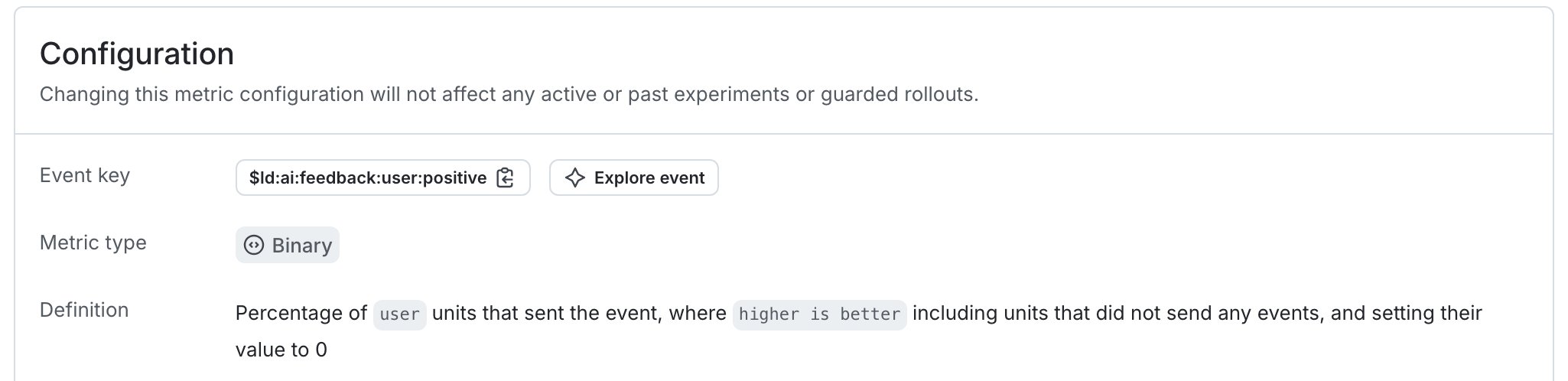
An autogenerated metric.